

Dogs and sauerkraut sound like an odd combo. But a lot of owners are feeding fermented foods now, so the question is fair: can dogs eat sauerkraut safely, and when does it become a problem?
Below is a detailed, human‑sounding breakdown you can drop into a blog with minimal edits.
Quick answer: can dogs eat sauerkraut?
Yes, many dogs can eat a small amount of plain, low‑sodium sauerkraut as an occasional supplement, not a daily side dish.
The safety hinges on three things: ingredients, salt level, and your dog’s health (especially heart, kidney, and gut).
If the jar contains garlic, onion, caraway seeds, or very high sodium, it moves from “interesting probiotic snack” into “skip this.”
What sauerkraut actually is (and why people give it to dogs)
Sauerkraut is finely shredded cabbage fermented with lactic acid bacteria, which gives it that sour smell and probiotic content.
Because of that fermentation, some owners use tiny amounts as a “natural probiotic topper” for kibble or homemade food.
Nutritionally, sauerkraut can contain:
- Vitamins C and K, plus B vitamins in smaller amounts
- Minerals like iron and manganese
- Fiber, which can influence stool quality and gut transit
- Live bacteria in unpasteurized products, supporting the microbiome
On paper, that sounds great. In practice, the details matter.
Potential benefits of sauerkraut for dogs
When the product is simple (cabbage + a modest amount of salt, no spices) and the portion is tiny, dogs may get a few genuine benefits.
1. Digestive support
Unpasteurized sauerkraut contains beneficial lactic acid bacteria that can support a healthy gut microbiome and aid digestion.
Some dogs with mild, occasional digestive wobble may handle small amounts well and show firmer stools or less constipation.
2. Immune and general health
A healthier gut microbiome is linked to better overall immune function, and sauerkraut delivers probiotics plus antioxidants like vitamin C.
These nutrients, in combination, can support tissue repair, normal blood clotting, and general resilience, especially when the rest of the diet is already solid.
3. Fiber and weight management help (indirectly)
The fiber in cabbage can promote a feeling of fullness and more regular bowel movements when used carefully.
For overweight dogs on calorie‑restricted diets, a vet may occasionally suggest small amounts of low‑calorie vegetables (like plain cabbage or carefully used kraut) to help them feel less hungry, but always under guidance.
Real risks: where sauerkraut goes wrong for dogs
Here’s where owners get into trouble.
1. Sodium overload
Most commercial sauerkraut is very salty.
A typical human serving can deliver more sodium than a small or medium dog should get in one go, especially if the dog already eats a complete commercial diet that is formulated to meet its sodium needs.
Too much salt can lead to:
- Increased thirst and urination in mild cases
- Vomiting, diarrhea, lethargy, and even sodium ion poisoning in severe cases
Dogs with heart disease, kidney disease, or high blood pressure are especially vulnerable and should generally avoid salty ferments altogether.
2. Toxic or irritating ingredients
Many jars are more than “just cabbage”:
- Garlic and onion (or onion powder, leek, chives): toxic to dogs, can damage red blood cells and cause anemia over time.
- Caraway seeds: often used traditionally in sauerkraut, but not considered safe for dogs and may irritate the gut.
- Added sugar, vinegar, artificial sweeteners, preservatives: can increase GI upset risk and offer zero benefit for the dog.
If any of those show up on the label, that batch is off limits.
3. Digestive upset and gas
Fermented cabbage is tough on some stomachs:
- The combination of fiber, natural acids, and salt can trigger gas, bloating, or loose stools, especially if you go from zero to “full forkful” overnight.
- Dogs with sensitive guts, inflammatory bowel disease, or pancreatitis often do badly with new rich or acidic foods and should not be used for experiments.
4. Underlying medical problems and medications
Beyond heart and kidney disease, a few other groups should skip sauerkraut completely:
- Dogs on MAOI medications (some older behavior or cognitive drugs): sauerkraut and other aged/fermented foods can interact with these in people, and similar caution is advised in dogs.
- Dogs on strict prescription diets, where unauthorized extras can throw off the formula.
In those cases, even “just a teaspoon” deserves a vet check first.
How much sauerkraut is safe for dogs?
Assuming your vet is on board, your dog is healthy, and the product is plain and low in salt, amounts should stay small.
Typical guideline ranges from multiple dog‑nutrition sources:
- Toy/small dogs: about ½ teaspoon to 1 teaspoon mixed into food, no more than a couple of times per week.
- Medium dogs: around 1–2 teaspoons, a few times per week at most, starting at the low end.
- Large dogs: up to 1 tablespoon, given occasionally, again starting with much less to test tolerance.
Across the board:
- Keep total extras (including sauerkraut) under 10% of daily caloric intake, so the main diet stays balanced.
- Introduce it gradually and watch for vomiting, diarrhea, gas, itchiness, or behavior changes; if any show up, stop.
Sauerkraut should never be a daily staple without specific veterinary supervision.
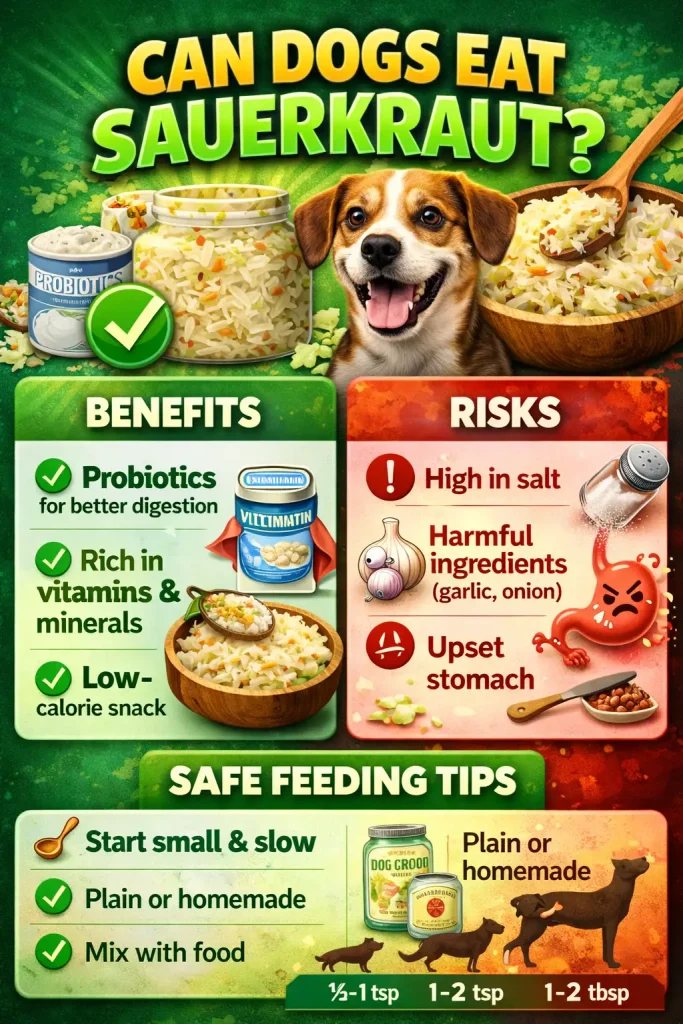
The safest kind of sauerkraut for dogs
If an owner really wants to use it, these rules help:
- Ingredients: only cabbage and salt, ideally nothing else.
- Salt level: low‑sodium commercial versions or homemade kraut with less salt than classic recipes.
- Unpasteurized: live, refrigerated sauerkraut has more active probiotics than shelf‑stable pasteurized versions.
- No extra flavorings: no garlic, onion, caraway, chilies, spices, or sweeteners.
Many vets and canine nutrition writers note that homemade sauerkraut with carefully controlled salt and no seasonings is the least risky option if you insist on using it.
When you should not give a dog sauerkraut at all
Skip sauerkraut entirely and talk to your vet if:
- Your dog has heart disease, kidney disease, or high blood pressure.
- Your dog is on prescription food or MAOI‑type medication.
- The product contains garlic, onion, leek, chives, or caraway seeds.
- Your dog already has chronic vomiting, diarrhea, or diagnosed GI disease.
In these cases, a dog‑specific probiotic supplement, plain unsweetened yogurt (if tolerated), or a vet‑recommended probiotic food is a cleaner and safer way to support gut health.
Practical tips for owners
If you’re writing this for pet parents, these are the kind of clear takeaways that convert:
- Always read the label: if you wouldn’t feed each ingredient on its own, don’t feed the mix.
- Start tiny: test ½ teaspoon on a healthy dog and monitor for 24 hours before ever increasing.
- Think “supplement,” not “side dish”: sauerkraut is a probiotic accent, not a veggie serving.
- When in doubt, ask a vet: especially for dogs with any ongoing medical condition or on medication.
You can read: Can Dogs Eat Mangoes? Safety, Benefits & Feeding Guide
FAQs
Can dogs eat sauerkraut every day?
No, dogs should not eat sauerkraut daily. Even plain sauerkraut contains natural acids and sodium that can upset a dog’s stomach if fed too often. Veterinarians recommend offering it only occasionally and in small amounts.
Is sauerkraut good for dogs’ digestion?
Yes, plain sauerkraut may support digestion because it contains natural probiotics. These beneficial bacteria can help maintain gut balance, but results vary depending on the dog’s digestive sensitivity.
How much sauerkraut can I give my dog?
Portion size depends on your dog’s size. Small dogs can have half to one teaspoon, while larger dogs may tolerate one to two tablespoons. Always start with a small amount and monitor for reactions.
Can puppies eat sauerkraut?
No, puppies should not eat sauerkraut. Their digestive systems are still developing, and fermented foods can cause stomach upset or diarrhea. Stick to puppy-specific diets unless advised otherwise by a vet.
What happens if a dog eats too much sauerkraut?
Eating too much sauerkraut can cause gas, bloating, diarrhea, vomiting, or dehydration due to excess sodium. If symptoms persist, you should contact a veterinarian.
Are there safer alternatives to sauerkraut for dogs?
Yes, safer alternatives include plain Greek yogurt, kefir, pumpkin purée, or vet-approved probiotic supplements made specifically for dogs.