

Can dogs eat grapefruit? The answer isn’t a simple yes or no. According to PetMD and the American Kennel Club, the flesh of grapefruit isn’t technically toxic to dogs. However, that doesn’t mean it’s a good idea to share this tangy fruit with your pup.
Can dogs eat grapefruit at all?
The flesh of grapefruit is not technically poisonous, but it’s very acidic and often causes vomiting, diarrhea, and general stomach upset in dogs, even in small amounts.
Because of that, most vets and major pet nutrition sources say there’s no real reason to feed it and plenty of reasons to skip it.
So while a tiny lick of pulp isn’t an automatic emergency, grapefruit is not a smart snack.
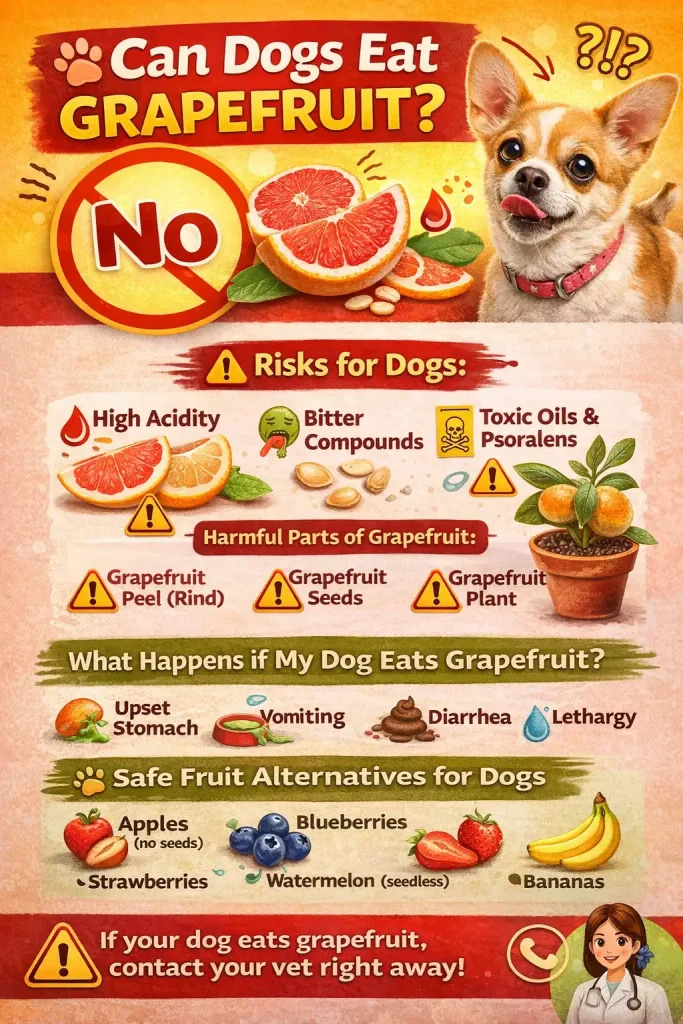
What is toxic: peel, rind, pith, and seeds
The dangerous part of grapefruit isn’t the tart flesh, it’s everything around it.
- The peel, rind, white pith, leaves, and seeds contain natural compounds called psoralens and certain essential oils that are toxic to dogs.
- These can cause GI problems, photosensitivity (skin reacting badly to sunlight), and in severe or repeated exposure, kidney and nervous system issues.
If a dog chews on whole grapefruit, eats peels from the trash, or gets access to the plant, that’s a call‑the‑vet situation.
Why grapefruit is a bad idea even if it’s “just the flesh”
Even if you carefully remove peel and seeds, grapefruit still isn’t a good treat:
- Very high citric acid: This can irritate the gut lining and throw off digestion, leading to loose stool, vomiting, or belly pain.
- Bitter taste: Dogs can detect bitter flavors and usually dislike them, so they get no joy from it anyway.
- No unique benefit: Vitamin C and fiber in grapefruit are easily replaced with dog‑friendly fruits like apple (no seeds), blueberry, or banana, without the toxicity risk.
So the payoff is low and the downside is very real.
Signs your dog may have eaten too much grapefruit
If a dog gets into grapefruit (especially peel, rind, or large amounts), you might see:
- Vomiting or diarrhea
- Drooling, loss of appetite, or obvious belly discomfort
- Lethargy, depression, or wobbliness
- Red, irritated skin or unusual sensitivity to sunlight after exposure
In serious cases, vets warn about possible kidney problems and neurological signs like tremors or seizures if enough toxin is absorbed.
Any time you know your dog has eaten grapefruit peel, a big chunk of fruit, or you see these symptoms, call a vet or poison helpline quickly with your dog’s size, amount eaten, and timing.
Safer fruit alternatives for dogs
If the goal is “refreshing, healthy fruit treat,” there are much better options:
- Apples (no seeds or core)
- Bananas (in small amounts)
- Blueberries and strawberries
- Peeled, seedless slices of orange or mandarin in moderation
All of these avoid psoralens, are less acidic, and are widely recommended in small portions for healthy dogs.
FAQs
Is grapefruit safe for dogs to eat?
Grapefruit is not recommended for dogs. While the flesh is not toxic, the fruit’s acidity and compounds can upset a dog’s digestive system.
What part of grapefruit is harmful to dogs?
The peel, seeds, and white pith contain essential oils and psoralens that may cause stomach irritation or more serious reactions in dogs.
Can a small amount of grapefruit harm my dog?
A small bite of grapefruit flesh is unlikely to cause poisoning, but it can still lead to vomiting, diarrhea, or discomfort—especially in sensitive dogs.
Why do dogs react badly to grapefruit?
Grapefruit is highly acidic and contains compounds dogs cannot process efficiently, which can irritate the stomach and intestines.
Are grapefruit products safe for dogs?
No. Grapefruit juice, extracts, or flavored products are more concentrated and should never be given to dogs.